
It's 2006...
You're 15 years old, packing for summer camp, low rise shorts and paper straight hair, MCR's The Black Parade playing on the CD changer your brother handed down to you. The iPhone didn't exist yet, neither did Facebook. You had a Nokia phone, ten cents a text, and just enough minutes to make it through the week. What you did have was a disposable camera tucked in your bag, and you couldn't wait to get it developed after your trip to see what you'd actually captured.
Flash forward to 2026. You're 35 now, looking back and wondering what it would take to bring some of that nostalgia back. You find yourself with friends thinking, I want to capture this moment, but I don't want to be on my phone. I stare at a screen all day already, the last thing I want to do is pull out the tiny computer in my pocket.
Enter CampSnap.
Quick disclosure before I keep going: some of the links in this post are affiliate links, which means if you buy through them I earn a small commission at no extra cost to you and you get $5 off!
Now, back to the fun part.
CampSnap is a family founded company by Brian and Melanie, two parents who sent their children to a camp in Canada for four weeks every summer. When their kids came back from those camps with rarely any photos and the photos they did have were ones that were more trash worthy than most, they thought "there had to be a better way". A better way to capture the memories of a camp their kids went to.
I discovered CampSnap back in 2024 when my friend showed up to hang out with me and my boyfriend, now fiancé. I could've sworn she was holding a disposable camera. She handed it to me and I saw that it was a screenless digital camera! Being a photographer, I was astonished by how light it was, how easy it was to hold and that it brought back memories of using a 35mm but more so, a disposable camera.
I was instantly hooked.
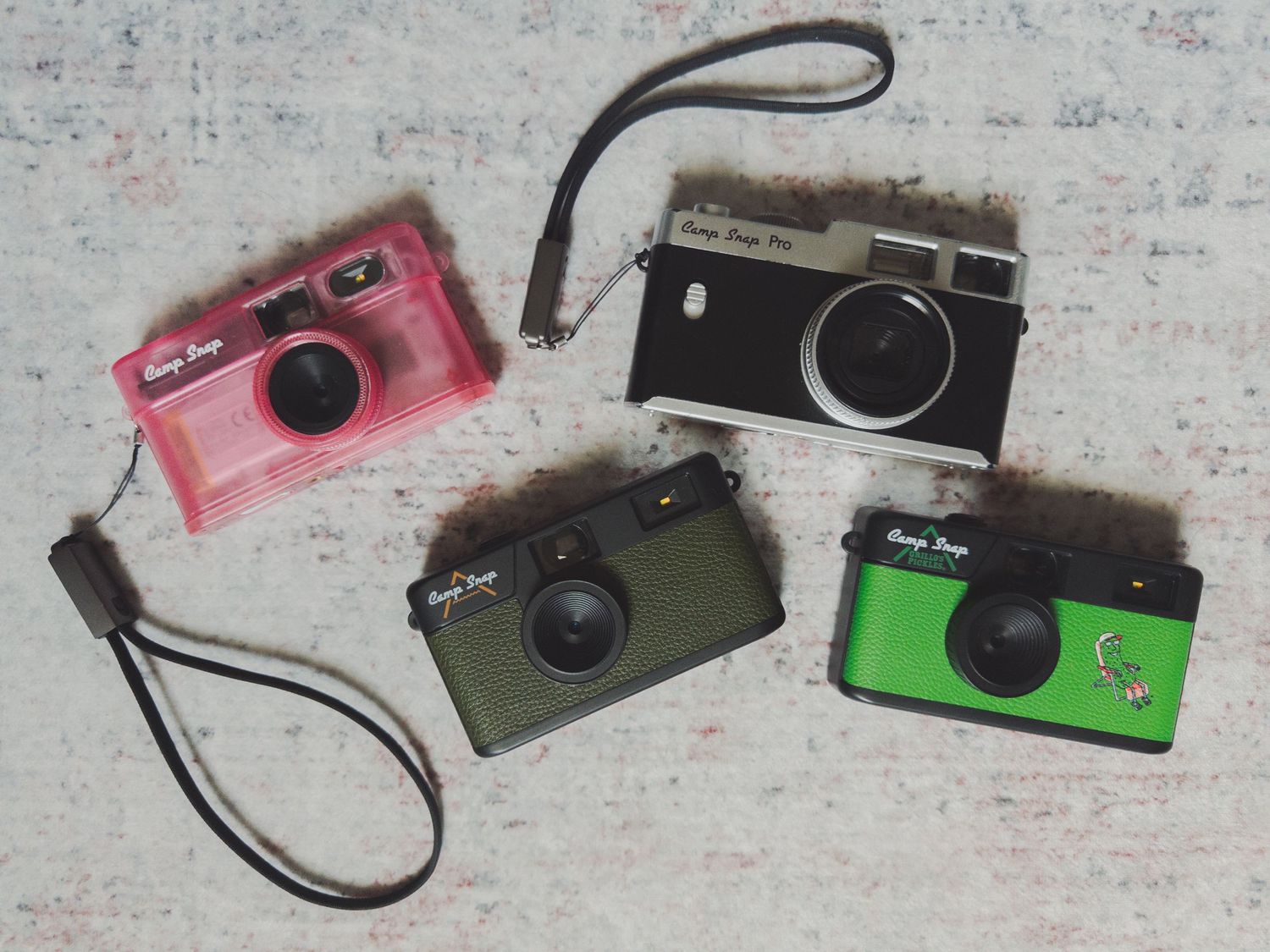
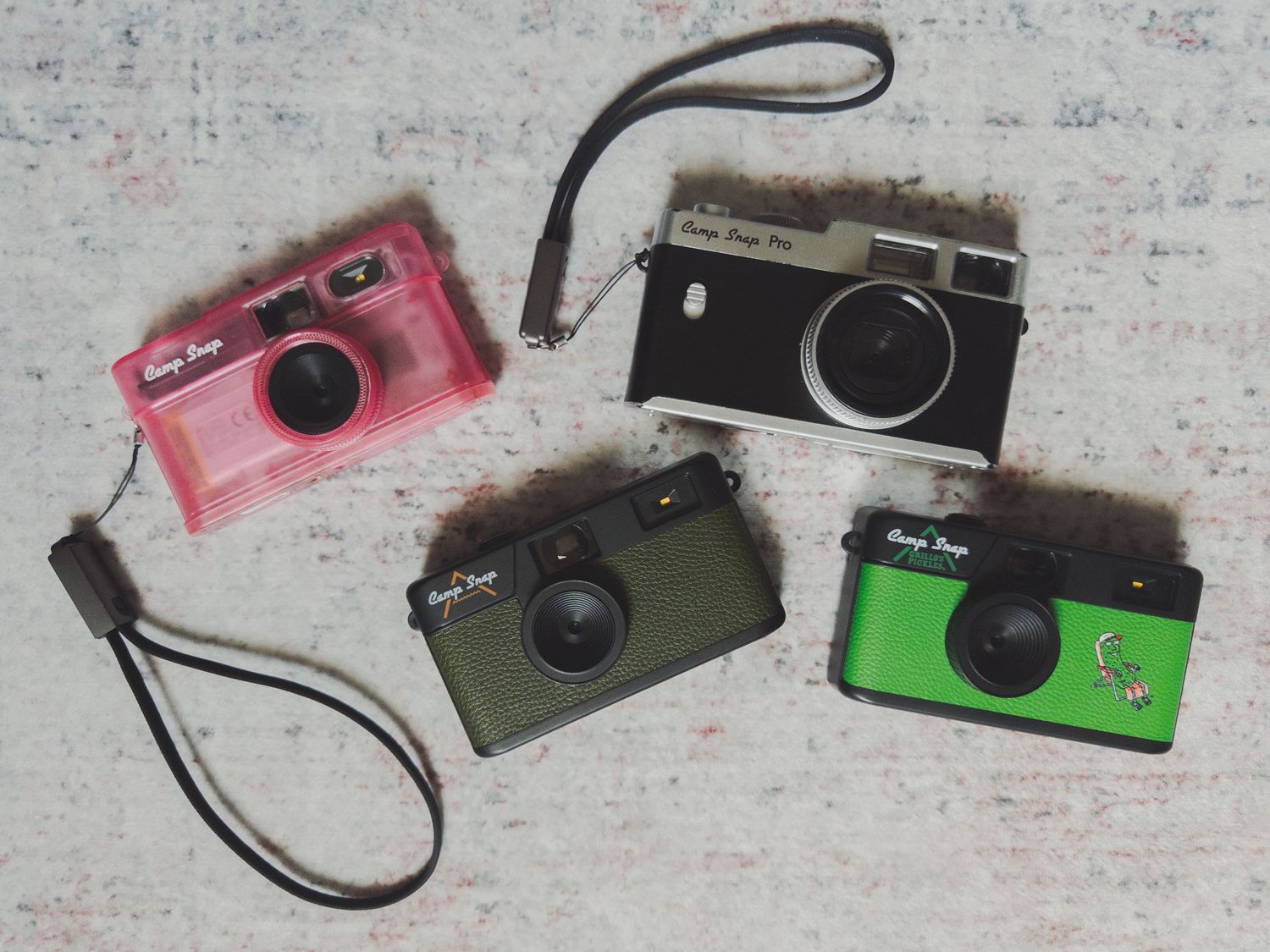
That first CampSnap turned into a small problem. Because once I had one, I wanted to know if the newer ones were actually better, or if I was just going to end up with a drawer full of plastic cameras and a maxed out credit card. So in the name of research (and, okay, also because I have zero self control when it comes to gear), I now own four of these things: the original CampSnap, the CampSnap Pro, the brand new CampSnap 2, and a limited edition CampSnap made in collaboration with Grillo's Pickles from SXSW here in Austin. Yes, pickles. We'll get there.
As a photographer, I wanted to actually put these side by side instead of just telling you "it's cute, buy it" and calling it a day. So here's what I found with each one.
THE ORIGINAL CAMPSNAP:
The original is where it all started for me, and honestly, where the magic still lives. The photos genuinely look like film. There's a softness to them, a warmth, like you shot them on a point and shoot camera you found in the back of a closet. The filters are fun and unique too, giving each photo its own little personality without you having to do a thing, well, almost nothing. Getting new filters onto the OG CampSnap meant downloading them from the CampSnap website, then dragging and dropping them into the camera's root folder. It worked, but it wasn't exactly something you could do on the fly, and switching back and forth between filters mid-outing wasn't really an option.
Build wise, this camera is deceptively tough. It's extremely light, almost surprisingly so for something that feels this durable. I've dropped mine more than a few times (oops), and it just kept on going. The shutter button has a satisfying press to it, easy and responsive, and it makes this old school click sound when you take a photo. I'll be honest, the sound got a little annoying after the hundredth shot, but there's something charming about it too. It sounds like a camera is supposed to sound.
I fell hard for this thing. I started using it in 2024 and was hooked from the very first shot. Hooked enough that I actually lost my first one (RIP) and had to ask for a replacement for Christmas. What started as curiosity turned into a full blown obsession, and a big part of that was just how easy the whole thing is to use. Point, press, done.
If I have one real complaint, it's the setup. Changing the date and time requires an actual tiny screwdriver, which feels like a strange throwback in a bad way, not a nostalgic one. My unsolicited pitch to CampSnap: every camera should come with a USB-C to USB-C cable that doubles as a lanyard, standard, not something you have to buy separately every time. I get it, extra accessories are an easy way to make more money, but this feels like a basic "the camera should just work out of the box" kind of thing. Charge your camera, wear your camera, never lose your camera again.
THE CAMPSNAP PRO:
If the original CampSnap is the disposable camera you grew up with, the Pro is what happens when that camera goes to trade school. It steps things up with 16 megapixels (double the original), a Xenon flash, a 4 filter dial, and 500 shots per charge, all while keeping the no screen simplicity that makes CampSnap what it is.
The build is where it really sets itself apart. It looks and feels more like an actual 35mm camera, with a traditional silhouette that feels more intentional in your hands. It's still easy to hold, but there's a little more weight and presence to it that makes it feel like a "real" camera rather than a toy.
The filter dial alone makes the $20 price jump worth it. On the original, switching filters meant downloading them from the CampSnap website, then dragging and dropping them into the camera's root folder, which took time and wasn't exactly something you could do on the fly. With the Pro, the filters are built right into the camera. You just turn the dial and shoot. No computer, no cables, no waiting. If you're someone who likes to switch up your look mid-outing, this alone makes the Pro worth the upgrade. Shop the CampSnap Pro here.
THE CAMPSNAP 2:
The CampSnap 2 is giving major early 2000s see-through phone energy, and honestly, I'm here for it. You can actually see the mechanics of the camera through the shell, all the little gears and guts on full display, which feels like such a fun throwback if you remember being obsessed with your clear Nokia or that see-through GameBoy everyone wanted.
Filter switching gets its biggest upgrade yet here. No more plugging into a computer, no more dragging and dropping files into a root folder like the OG. Now it's just a button, located on the back where a screen would normally live if this were a regular digital camera. One press and you're onto the next filter. It's such a small change that makes a huge difference in how the camera actually feels to use.
That same button doubles as a second shutter button, which is a genuinely thoughtful touch for smaller hands. Kids don't have to stretch their pointer finger all the way to the top of the camera to get the shot, they can just press the button on the back instead. It's a small design detail, but it shows CampSnap is actually thinking about who uses these things.
And the best part? It's the same price as the original, so you're getting an easier filter experience for zero extra cost.
I have the pink see-through version, but it also comes in see-through blue, orange, and green if pink isn't your thing. And if you want something a little more classic, there are traditional colorways too: black, white, yellow, dark green, and chestnut brown. Shop the CampSnap 2 here.
SO, WHICH ONE SHOULD YOU ACTUALLY BUY?
Look, I own all three (four, if you count my Grillo's Pickles baby), so take this with a grain of salt, because I clearly have no self control. But if I had to send you off with one clear answer, here's how I'd break it down.
Get the original CampSnap if you want the purest, most nostalgic version of this whole experience. It's the closest thing to that disposable camera you packed for summer camp in 2006, and it's the most budget friendly way to try this whole no screen thing out for yourself.
Get the CampSnap Pro if you want that upgrade in photo quality (hello, 16 megapixels) and you're someone who likes to actually play with your filters on the fly. That filter dial alone makes it feel like a completely different camera to use, and honestly, at only $20 more than the original, it's hard to say no.
Get the CampSnap 2 if you love a good design moment, want the easiest filter switching of the three, or you're buying one for a kid. The see-through shell is just plain fun, and that back button doing double duty as a shutter button makes it the most kid-friendly option in the lineup, all for the same price as the original.
Whichever one you land on, you're getting a camera that does something your phone can't: it gets out of the way and lets you actually be in the moment. And honestly, that's rare enough these days that it's worth the $70.
If you want to grab one for yourself, here's my link, it costs you nothing extra, gives you $5 off and helps support this blog!